


Every Wednesday and Saturday morning, visitors to the Lesser Slave Lake Bird Observatory have the opportunity to see wild birds up close while learning about one of northern Alberta’s busiest migration corridors.
The observatory’s drop-in tours, which run from 9 to 11 a.m., gives the public a behind-the-scenes look at bird banding, migration research and conservation efforts that have been taking place at the site for three decades.
“We have been operating for 30 years,”says Patti Campsall, executive director of the Lesser Slave Lake Bird Observatory. “It’s important to share what we are doing with the public.”
Campsall says that the tours are designed to be family-friendly, allowing visitors to watch researchers safely remove birds from soft mist nets, learn how birds are identified and banded, and discover why monitoring migration is important.
During a tour by Dana MacDonald, attended by the Lakeside Leader, visitors were able to observe birds being handled by trained staff, feel the softness of an owl’s feathers (through sample feathers), and learn how researchers collect information before releasing each bird back into the wild.

Bronwyn Robinson, one of the bird banders, explains that this time of year offers a unique opportunity because both local breeding birds and migrating birds can be found at the observatory.
“We’re in the sweet spot right now,” Robinson says. “We’re still catching birds that need to go back to their families because they’re not old enough to be on their own, while we’re also catching birds that are finished breeding and ready to migrate.”
Some species stop in the area for only a short rest before continuing their journey south, while others remain throughout the breeding season.
“Sometimes they’ll take a break here for a day or two,” Robinson says. “But closer to breeding season, we’re catching the birds that are actually nesting in the area.”
She explains that many of the colourful songbirds visitors enjoy during the summer travel thousands of kilometres every year.
“You won’t find them here in the winter,” Robinson says, referring to species such as the Philadelphia Vireo. “They migrate to Central and South America.”
Although Philadelphia Vireos are not among the observatory’s most frequently captured species, Robinson says researchers still band several dozen each season, and they are known to breed in the Lesser Slave Lake region.

Campsall says migration is already underway as temperatures gradually begin to cool.
“They are getting out of here,” she says. “Because of the cold, they are migrating.”
During the winter months, the birds most commonly seen around the area are year-round residents such as chickadees, while many warblers and vireos have already travelled south.
Beyond introducing visitors to bird banding, Campsall hopes the tours inspire more people to take an interest in birdwatching.
“More people are getting into birdwatching now,” she says.
She also recommends the Merlin Bird ID app, developed by the Cornell Lab of Ornithology, which helps users identify birds by recording and recognizing their songs.
The drop-in tours continue every Wednesday and Saturday until Aug. 26.
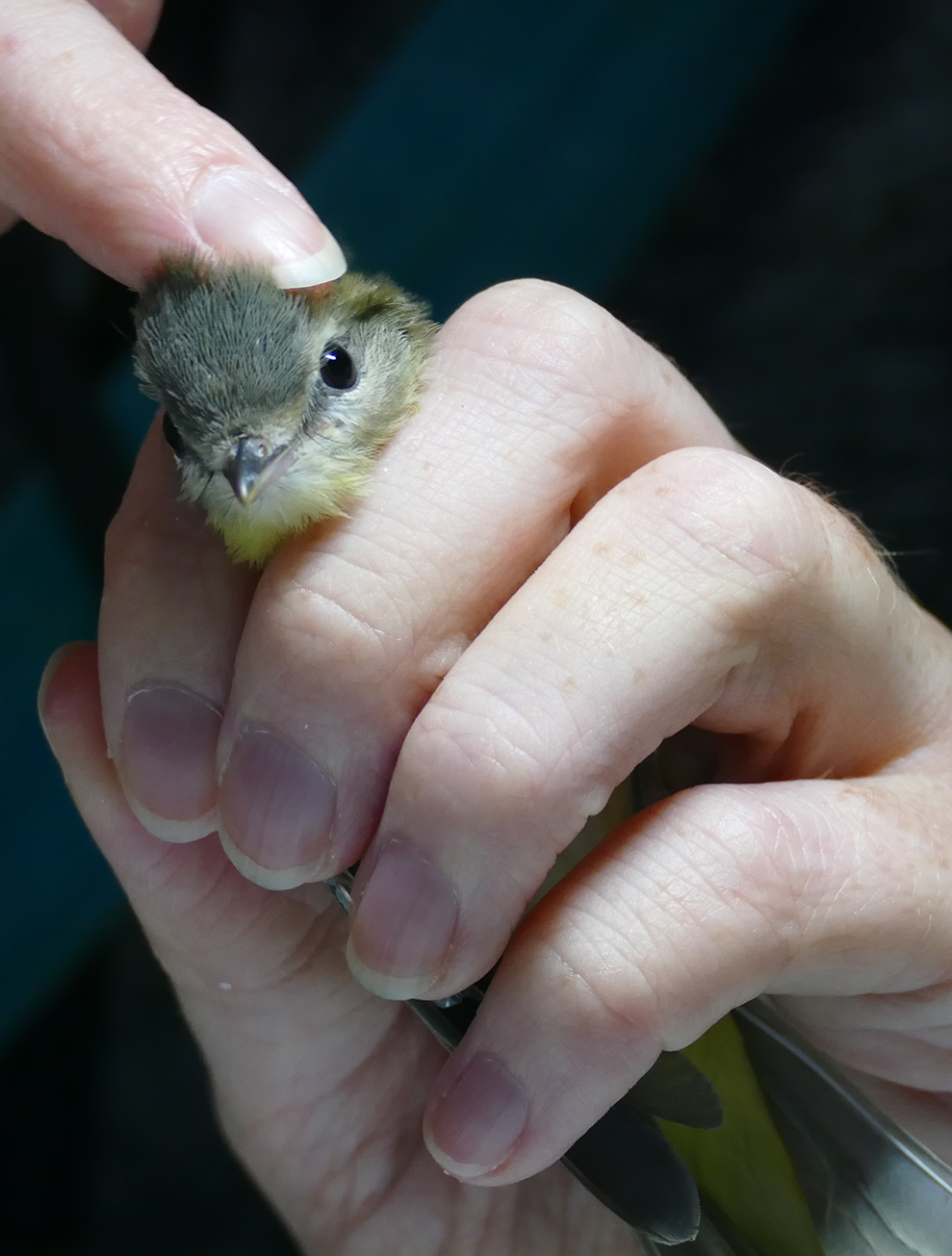
The banding process helps researchers monitor bird health and migration patterns.
The monitoring facility is located along the Lily Creek Group Use Road on Highway 88, north of the Boreal Centre for Bird Conservation turnoff. The program is free, and visitors of all ages are welcome to experience the fall migration and learn more about the birds that pass through the Lesser Slave Lake region each year.
Julia Magsombol
Lakeside Leader